
Coastal Explorers
SoundWaters Coastal Explorers program will engage every student in meaningful watershed science experiences. Through this intensive experience the students become stewards of their local watershed system through hands-on analysis and assessment of water quality in upland and coastal sites within the Long Island Sound watershed. Coastal Explorers is a cycle of learning for students that builds upon classroom content, enhances critical thinking skills and offers hands-on, STEM experiential learning opportunities. The program helps students succeed in the classroom by providing additional exposure to concepts and vocabulary in biology, geology and physical science. Coastal Explorers promotes a sense of connection and respect for the environment and the students’ community.
Coastal Explorers is made possible through funding from the Blavatnik Family Foundation Science Fund.
ACTIVITES
Activities
Students will conduct hands-on experiments as they rotate through 4 stations along the coastal shores of Long Island Sound. They will assess the quality of Long Island Sound’s waters, and with the data collected students will examine physical characteristics and chemical substances, variables and trends from each site. There are 8 station descriptions below –choose 4 one-hour stations for the field program.
Microplastics:
- Students will collect microplastics and marine debris at Cove Island Park. Using the NOAA Marine Debris Monitoring and Assessment Project Transect Survey Form, students will categorize and assess what debris is being deposited onto the beach/wrack line and learn how to categorize that debris. The group will discuss the impacts of marine debris and plastics pollution on the Long Island Sound and our shoreline, and some important initiatives to mitigate this pollution.
Climate & Migration:
- Students will explore the inhabitants of Cove Island Park by taking a birding walk and keeping record of what they see. They will make their own observations to identify the species of birds that we encounter and learn about their local populations. While exploring, we will discuss about the migrations of birds and the impacts of human activity and climate change on our local migratory species.
Animals in a Changing Climate:
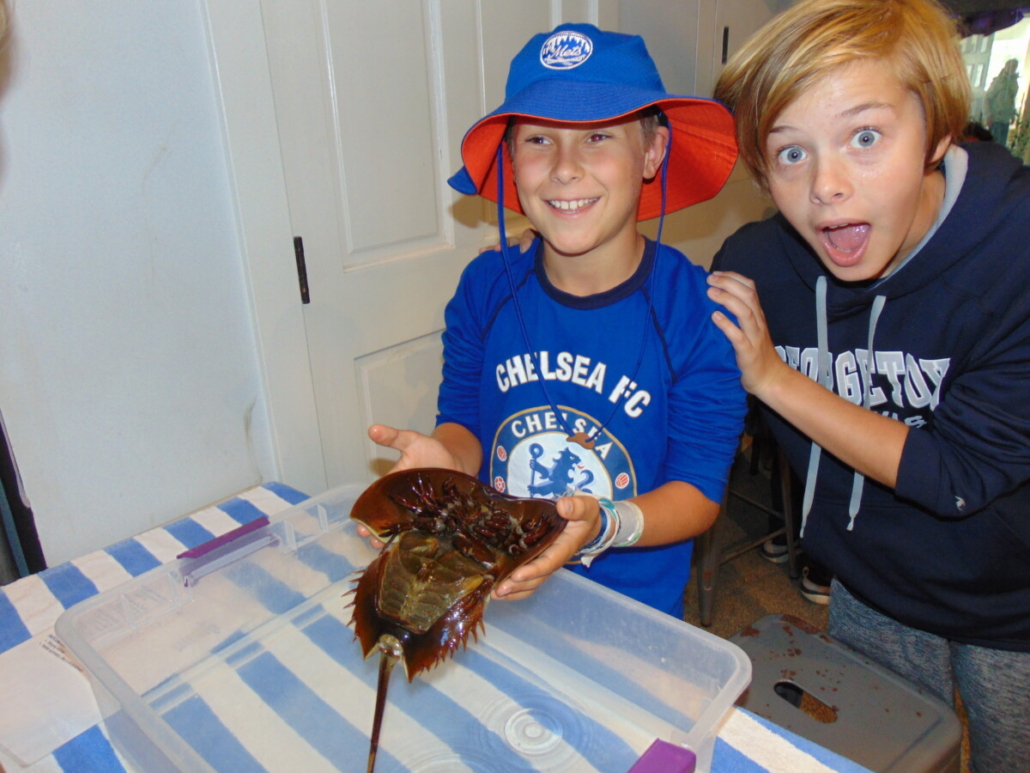
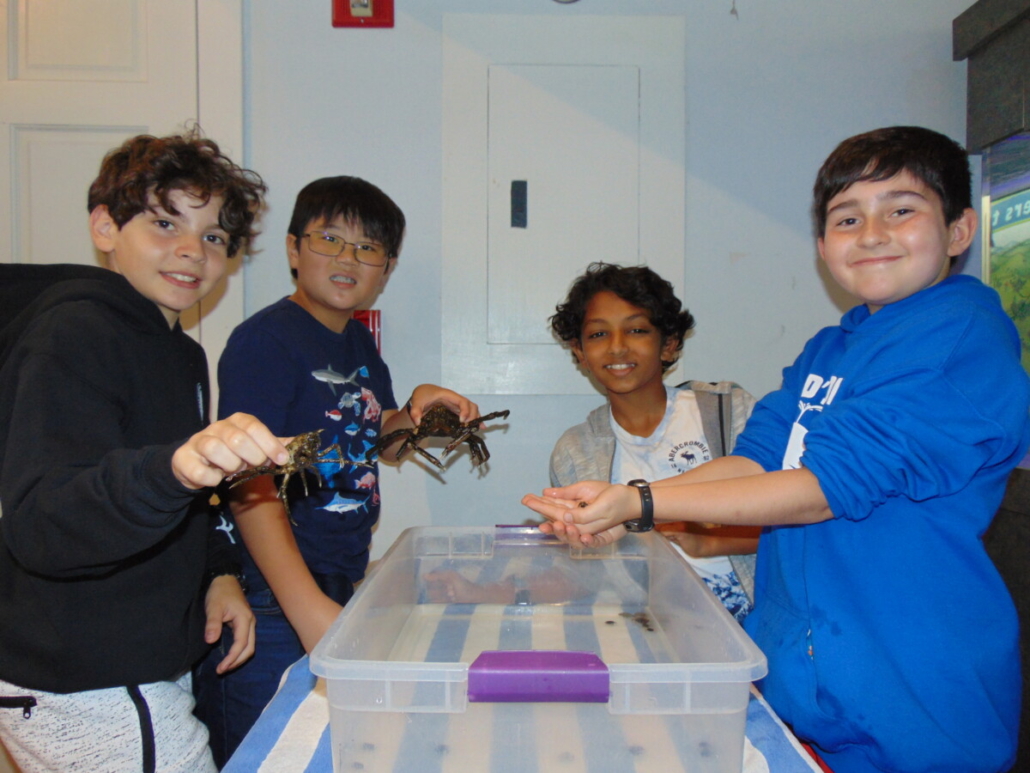
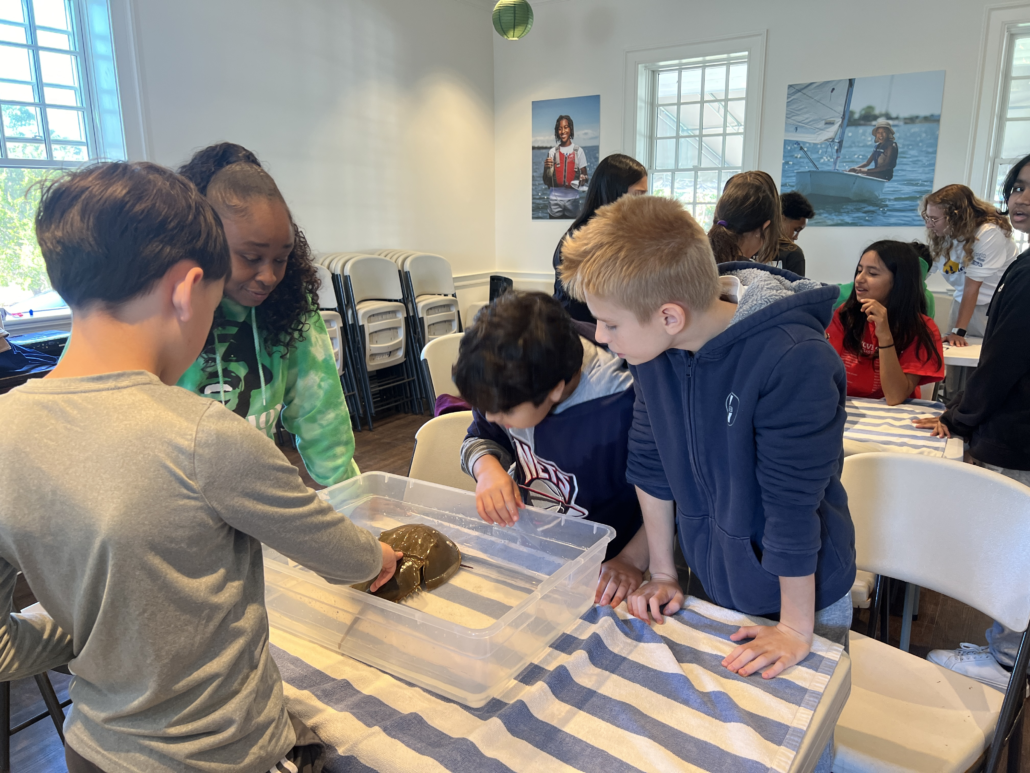
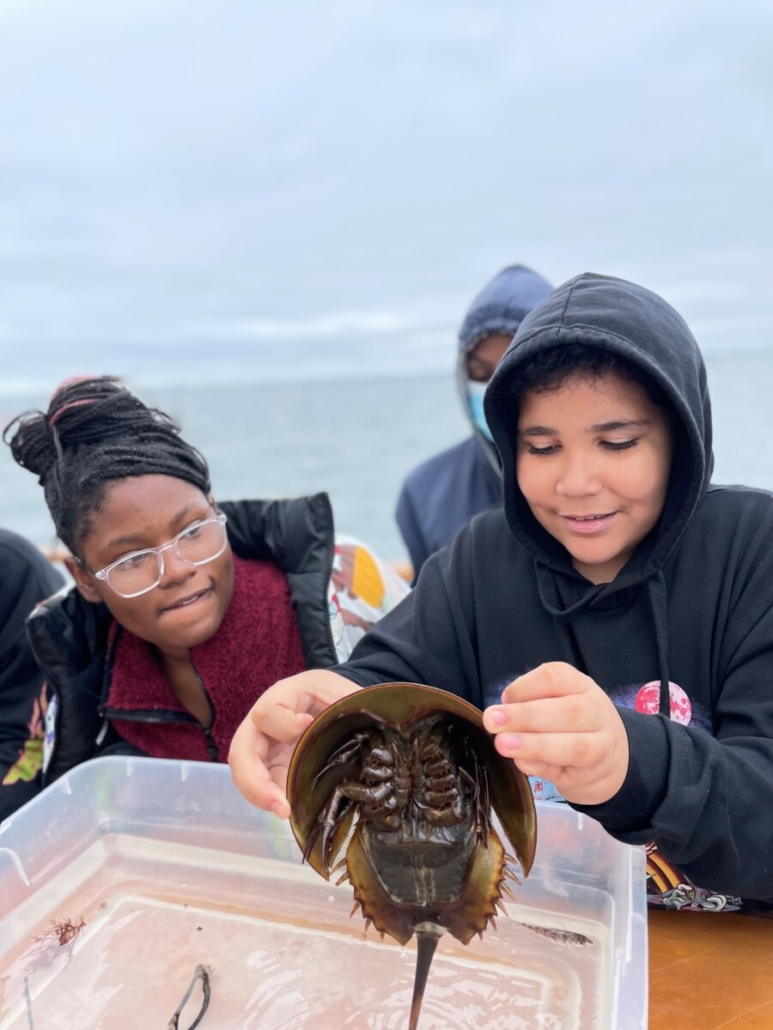
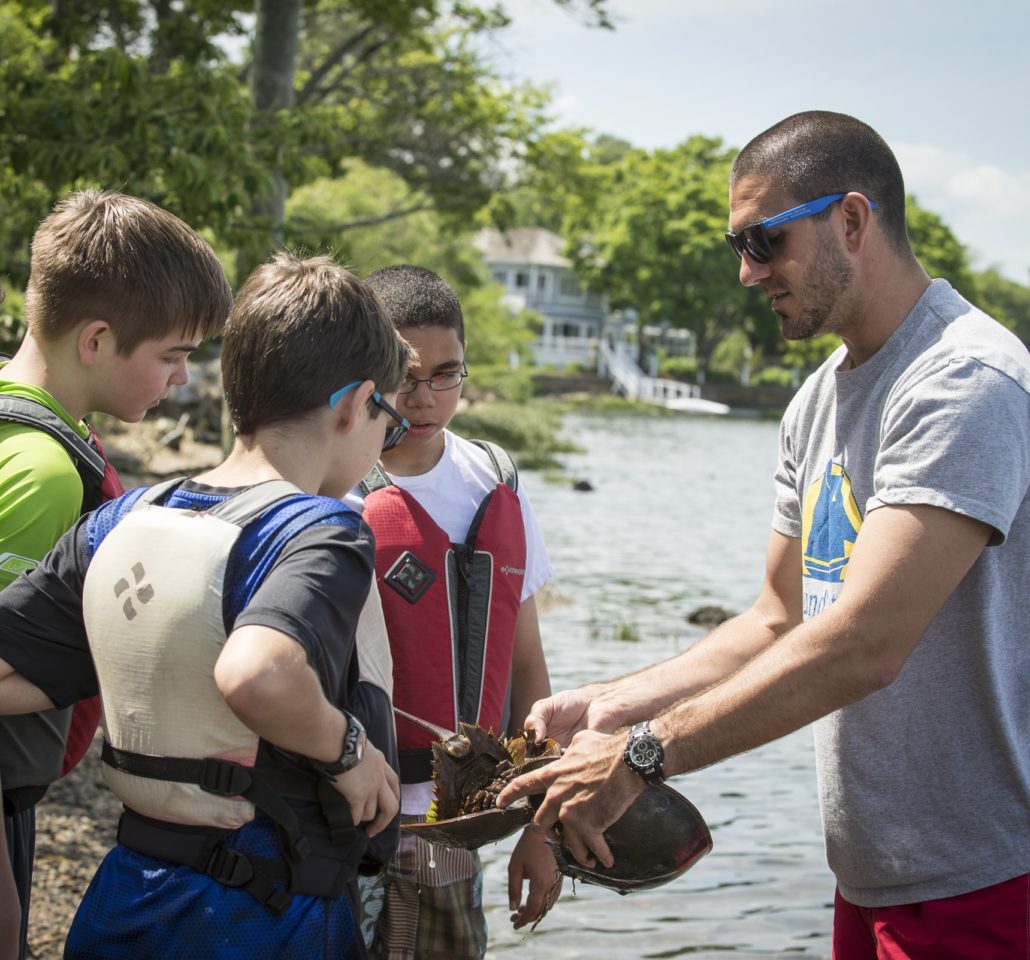
- Get to know some of the inhabitants of Long Island Sound in person! Students will meet and be able to touch a variety of animals, including diamond back terrapins, horseshoe crabs, oyster toad fish, spider crabs, oysters, sea stars, and lobsters. By thinking critically about climate change, students will discuss its effects on the animals we meet and what we can all do to help.
Water Quality Sampling & Testing:
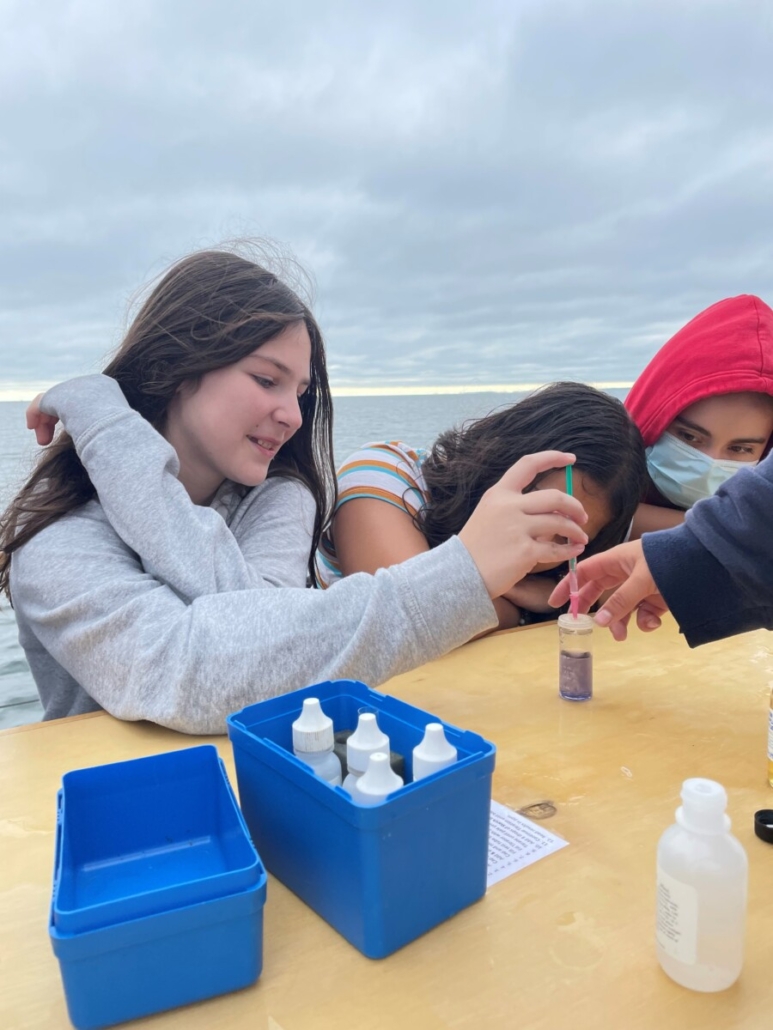
- Students will sample, test and examine water quality using scientific equipment (hydrometers, thermometers, refractometers, testing strips, colorimeters and pH meters etc), to test multiple water quality parameters (salinity, pH, nitrite, temperature and dissolved oxygen) in different water samples. They also explore by measuring salinity, how fresh water from rivers mixes with the sea water of the Atlantic Ocean to create the brackish water of Long Island Sound and its tributary estuaries, like Holly Pond.
Groundwater Filtration:
- Through hands-on investigation, students will study water, its properties and how it moves through the Earth’s environment. Students will use a watershed model, soil porosity gear and turbidity tubes to examine ways that pollution can enter the watershed and how everyday activities impact the environment. Through creativity and ingenuity, students think outside-the-box to determine how human activity impacts water resources in CT.
Canoeing:
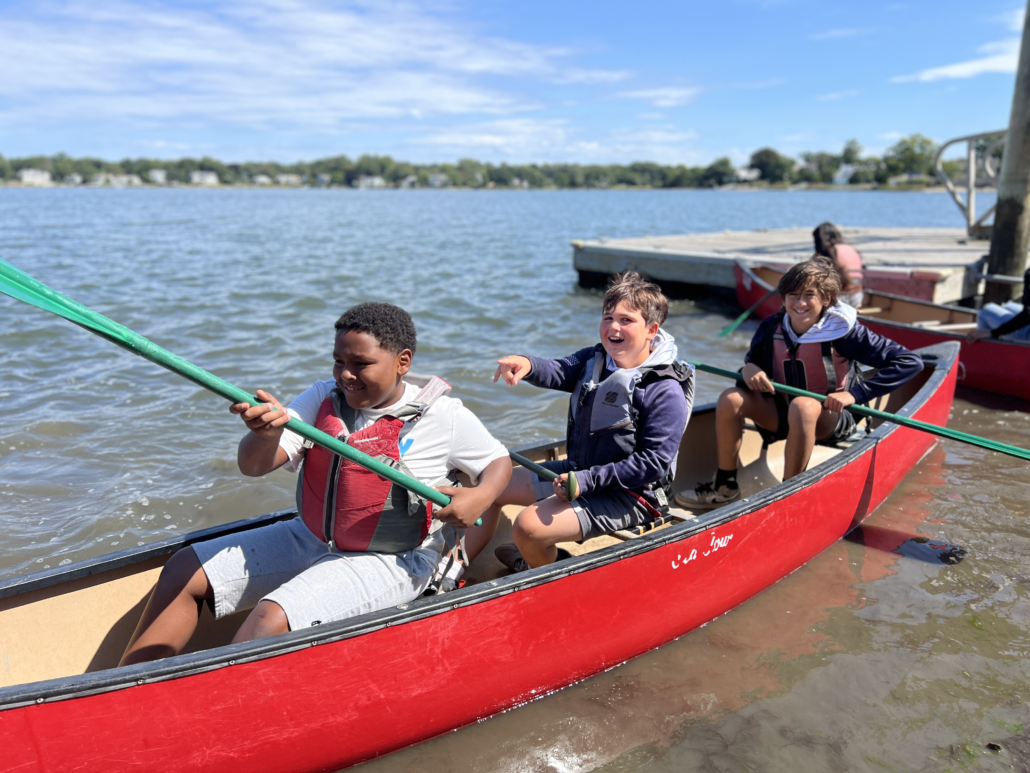
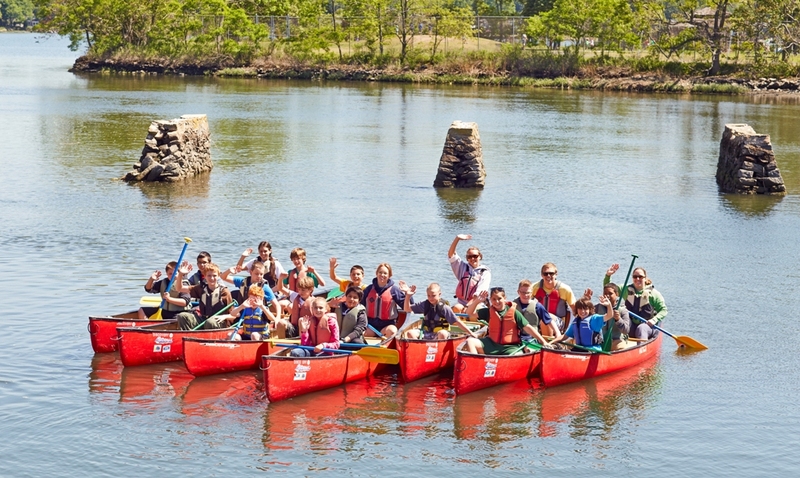
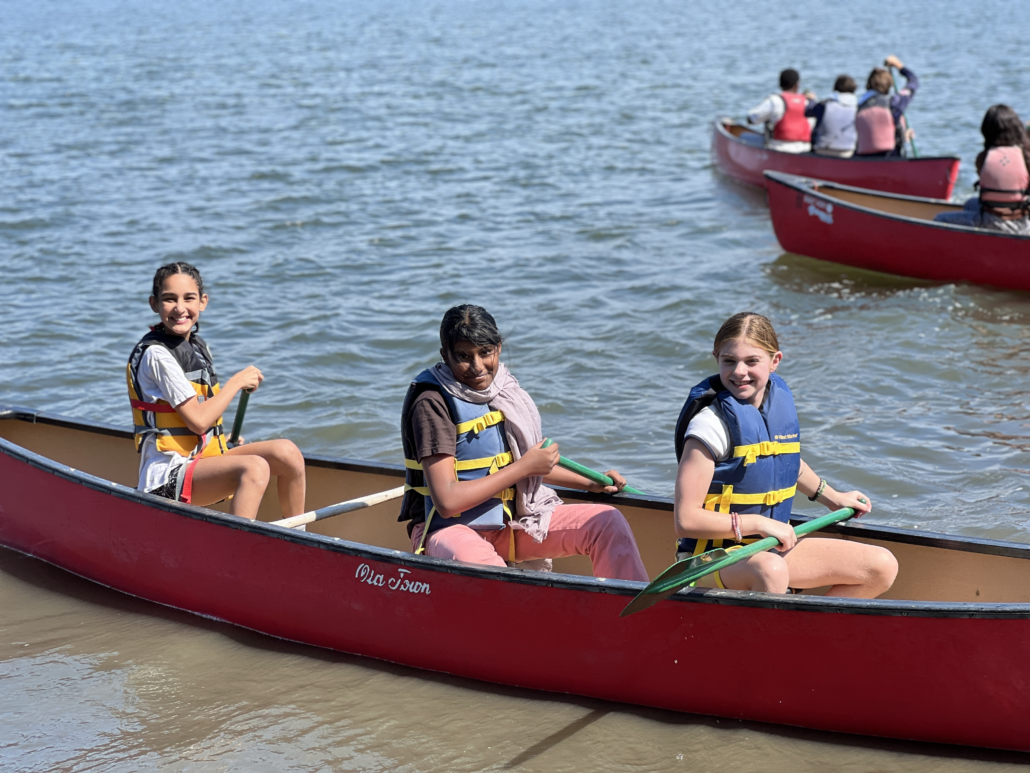
- Teamwork and teambuilding for all! Students will learn basic paddling skills and navigate Holly Pond in a canoe with their peers. Working together students will steer their boat and discover the many habitats of Long Island Sound and how they are important to humans.
Seining:
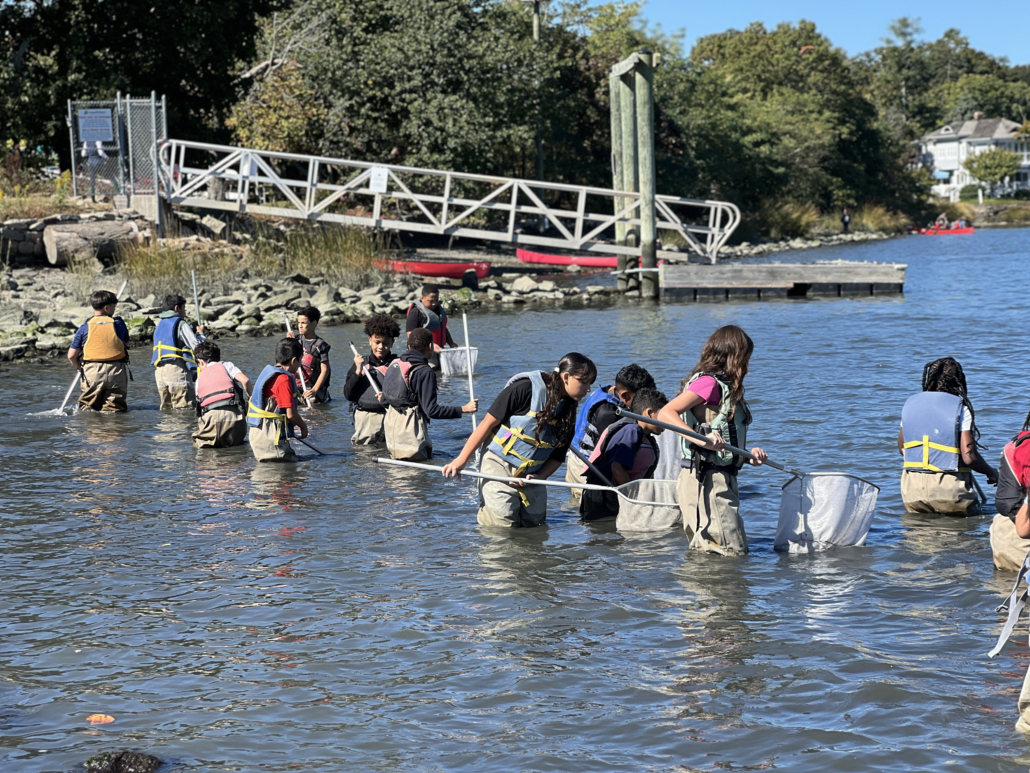
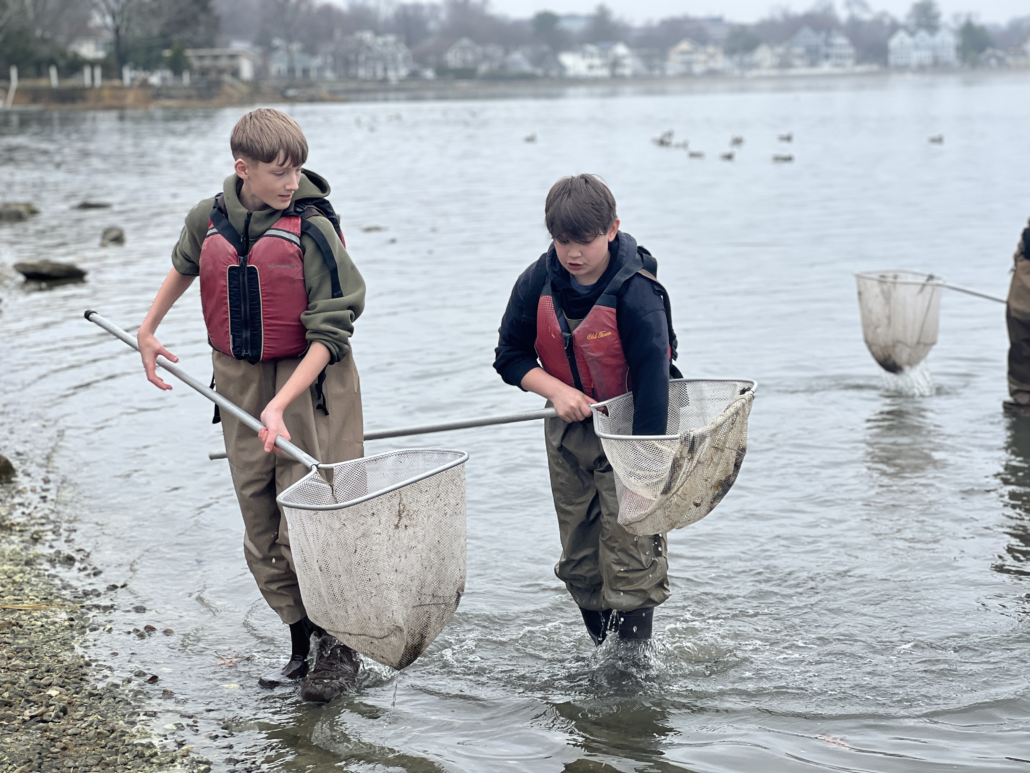
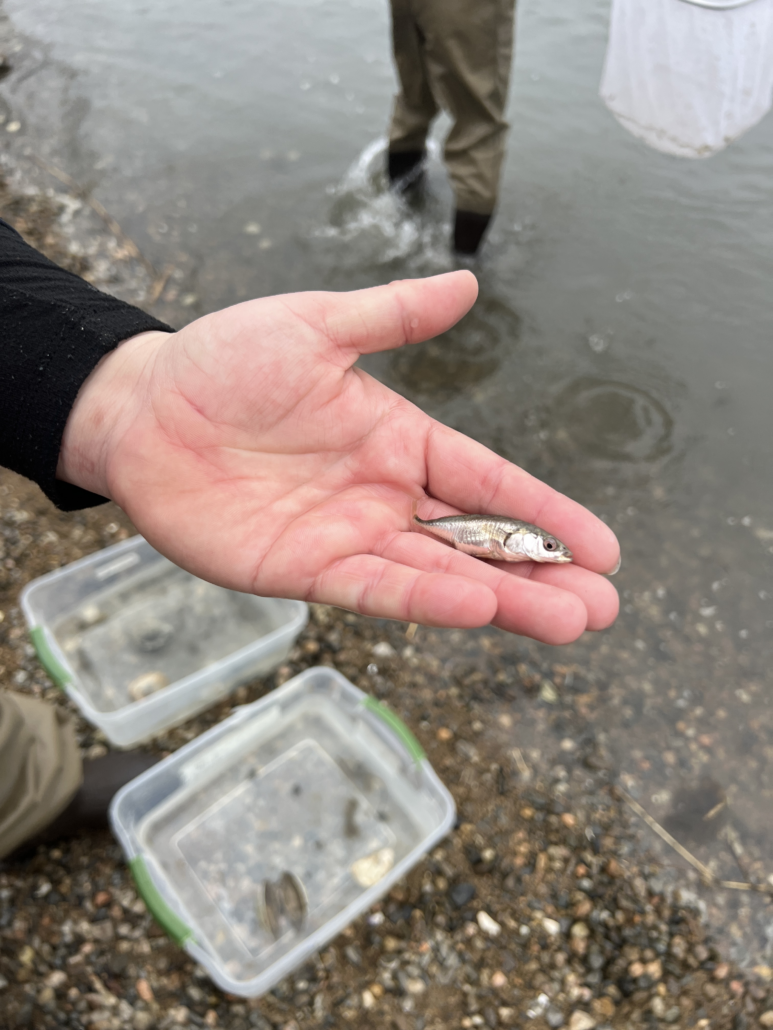
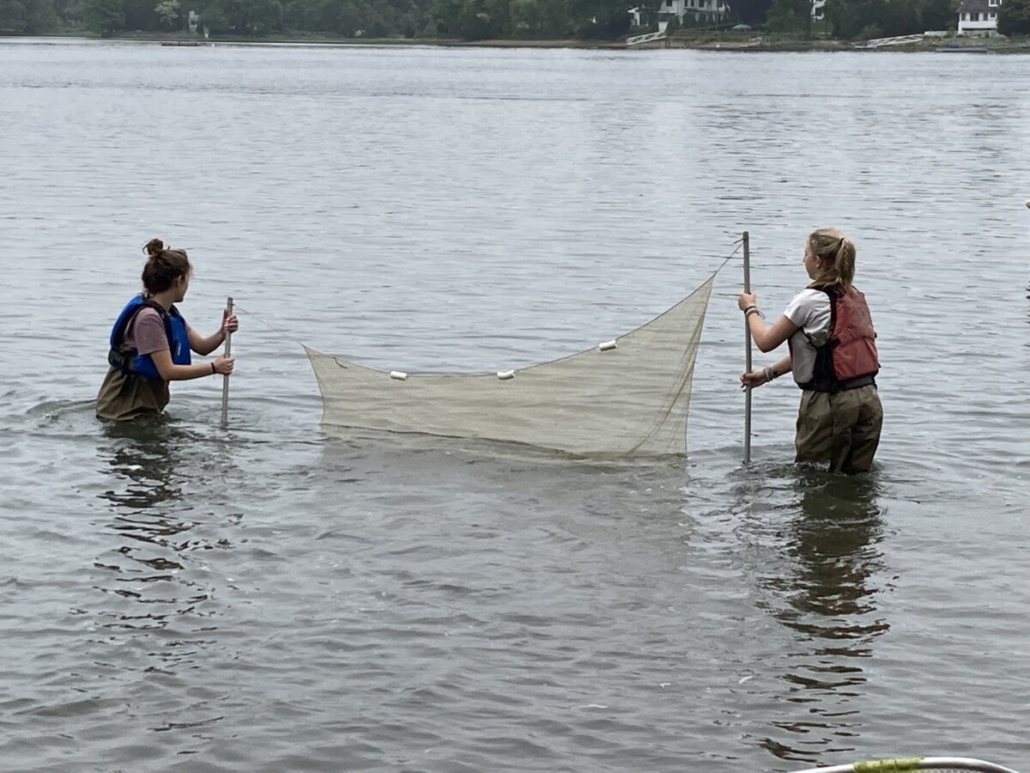
- Perform a hands-on experiment of the shallow waters of Long Island Sound. Each student will be provided with a pair of waders, lifejacket and net. Working together students will follow random sampling protocol to collect animals using a seine net. Animals collected are identified and students can get up close and learn by doing.
Population Study:
- To accurately assess population trends, a baseline survey must be conducted and then repeated. Students will examine Asian Shore Crabs, which play an important ecological role in the Long Island Sound food web. A decline in the number of crabs will impact other species. Students will follow field testing protocol to determine the population of crabs and other coastal species along a transect at the rocky shore. Students will assess and explain how human actions and weather impact coastal populations.
Horseshoe Crab Blood Lab:
- In this bio-engineering experiment students will conduct an in-depth examination of the horseshoe crab’s anatomy and test and asses the importance of their blood to the medical field. Students will simulate real science in action. Using pipettes and microscopes, students will use the “blood” to determine which “vaccine” sample is contaminated.
NGSS ALIGNMENT
SCHEDULE
PRICING
Science on the Sound – Floating Classroom
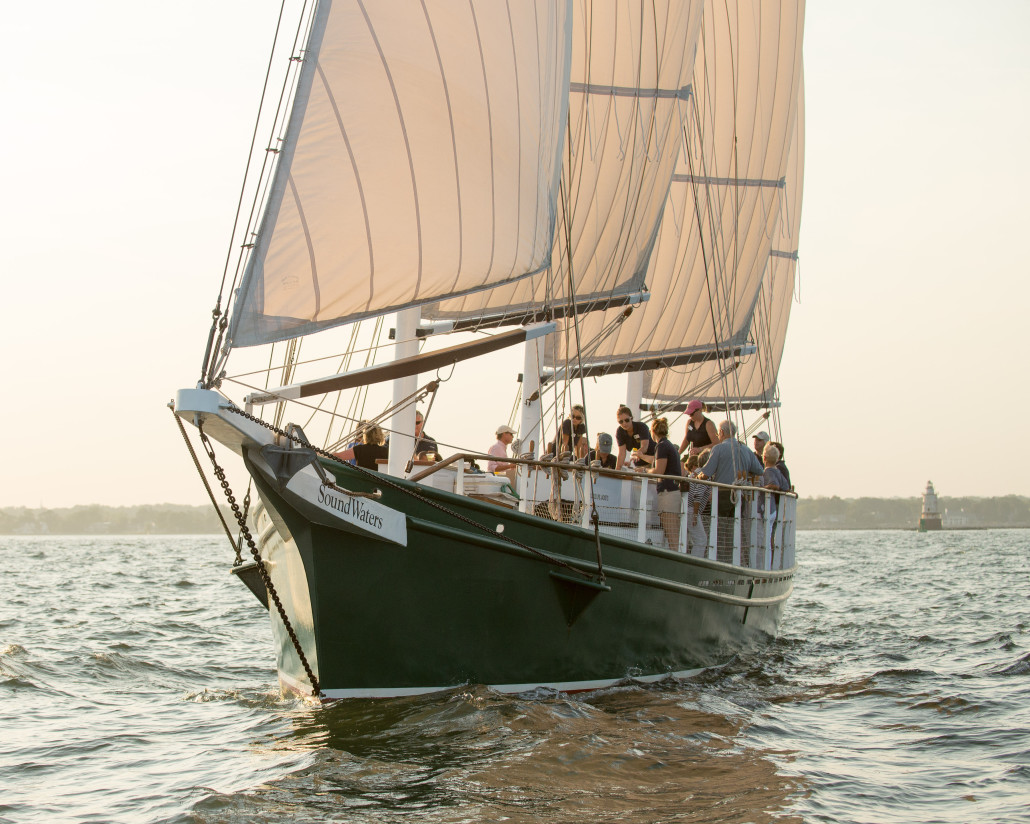
Welcome aboard the Schooner SoundWaters!
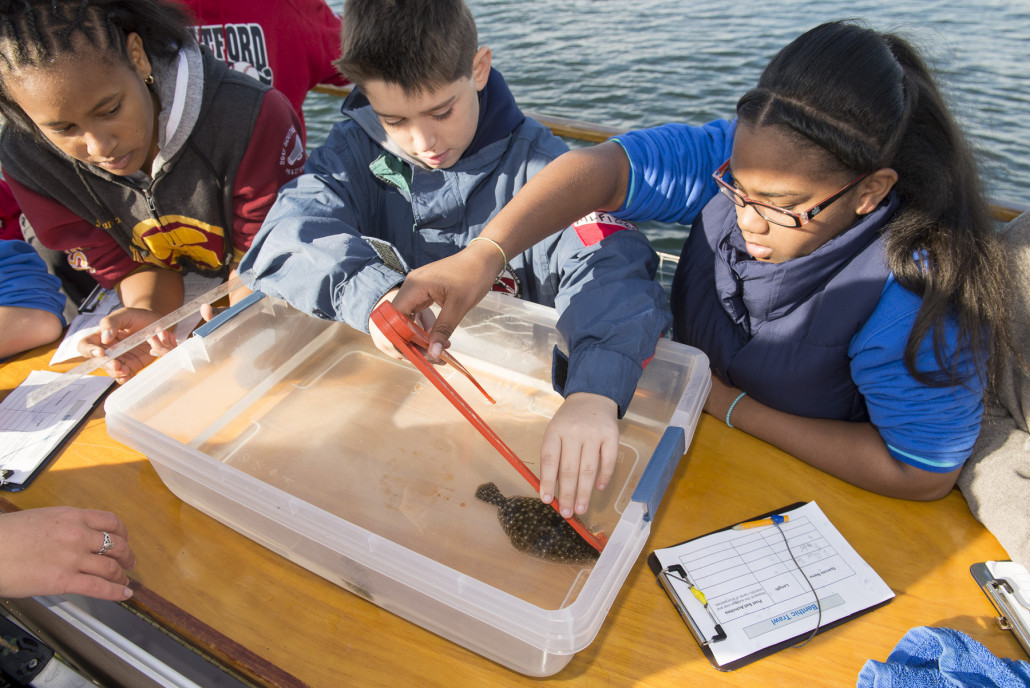
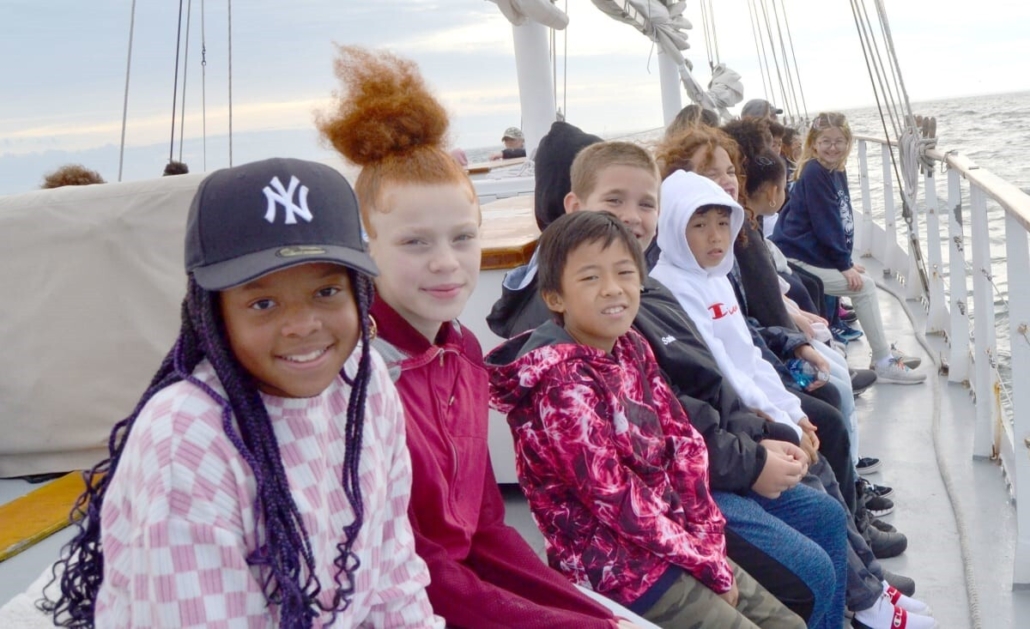
Learn key concepts and theories while aboard the Schooner SoundWaters. Your students will test the water quality of Long Island Sound, demonstrate mechanical advantage, touch and investigate the structures of live animals and more! Challenging, rigorous science in an exciting and unique setting.
ACTIVITES
Overview of Activities:
Our shipboard learning is focused on hands-on activities that allow our students to act as field scientists. They will use real scientific tools to collect data, make observations, and understand the ways we impact and are impacted by the Long Island Sound. Students will be engaged in active learning while also having the opportunity to appreciate and develop a deeper connection to one of our most valuable natural resources.
Activities
Water sampling– How can we learn about Long Island Sound without looking at the water itself? Take samples of water from different locations and use tools to take measurements and compare them in order to learn more about the way water quality affects the health of the Sound.
Intertidal habitats– Examine a model of the rocky intertidal environment and meet and hold some of the creatures that call it home. Get your hands dirty and learn how the intertidal zone is impacted by human activities, and how we are affected by it.
Trawling– Deploy and retrieve the trawl net in order to learn about some of the equipment that field scientists use to study biodiversity and to come face-to-face with some of the residents of Long Island Sound. Collect, study, and touch animals from the lowest levels of the Sound.
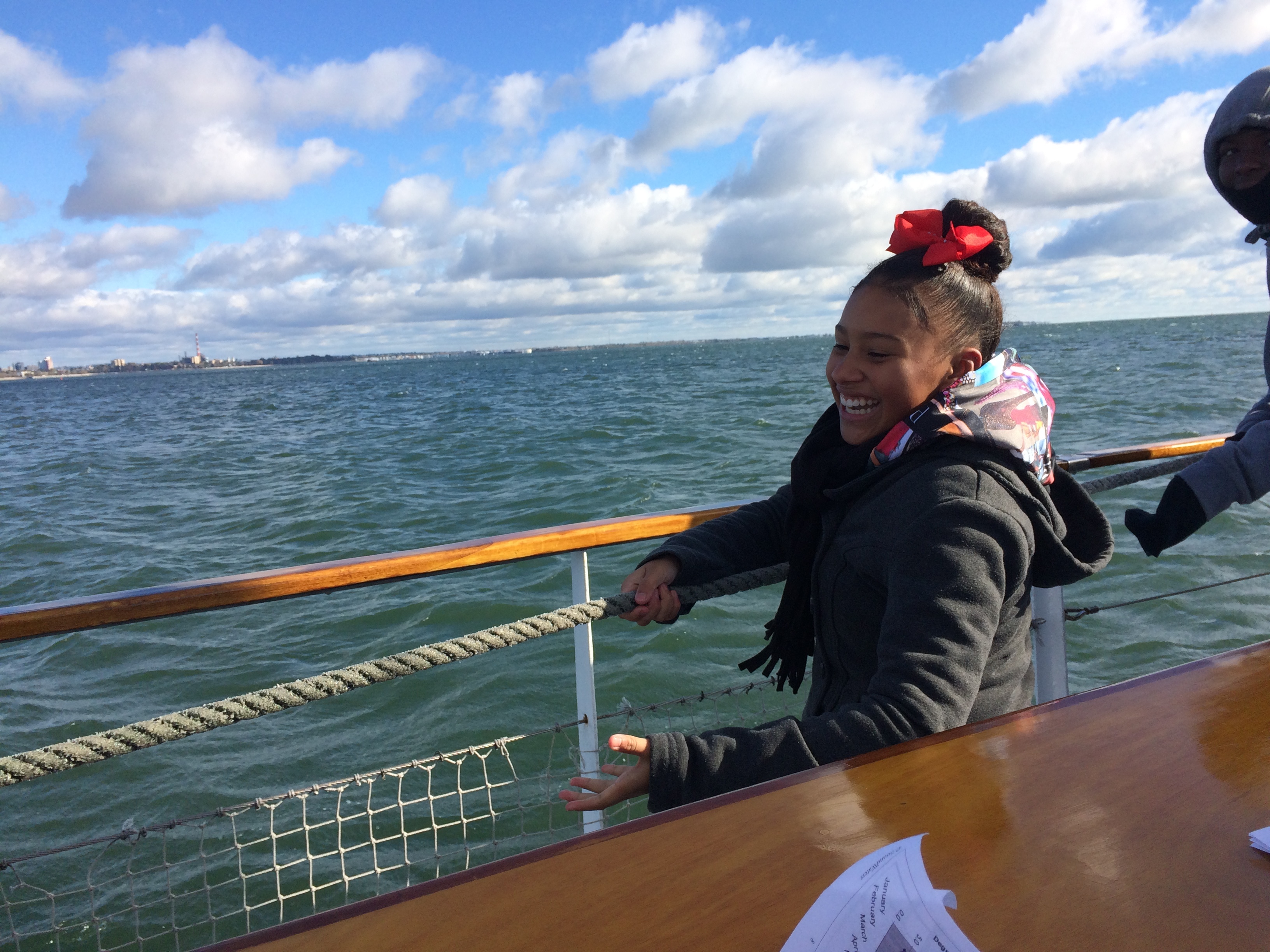
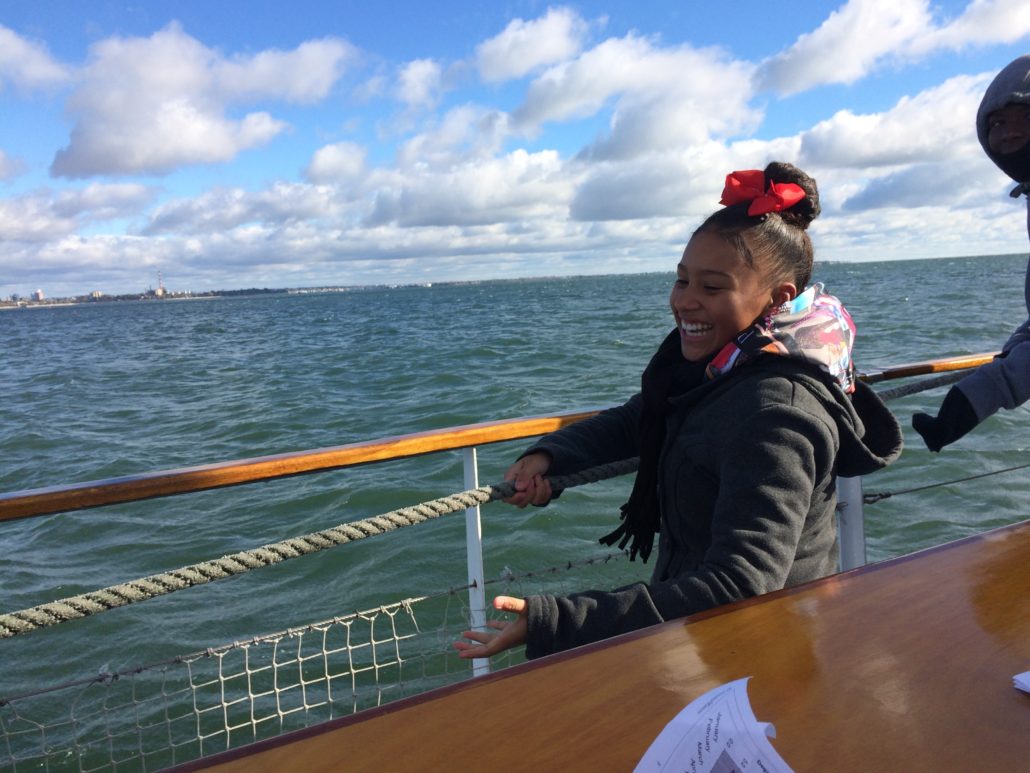
Raising sails– Work together to set sail! Using a bit of muscle, we can turn our 80-foot floating classroom into a quiet, emissions-free way to travel Long Island Sound as it has been traveled for hundreds of years.
Field observations– Take a moment to simply observe the Sound and use your senses to determine the conditions for your field study for that day. Compare how these conditions differ from what you typically experience and understand what a special and unique place Long Island Sound is.
Plankton sampling– Take a closer look at the critical (but often tiny) members of Long Island Sound that fill its waters. Use a plankton net to retrieve a sample of plankton and use field scopes in order to identify what species can be found here. Discuss the role that plankton play in the Long Island Sound food web and how they directly affect us, even on land.
SCHEDULE
PRICING
After-School Science and Sailing
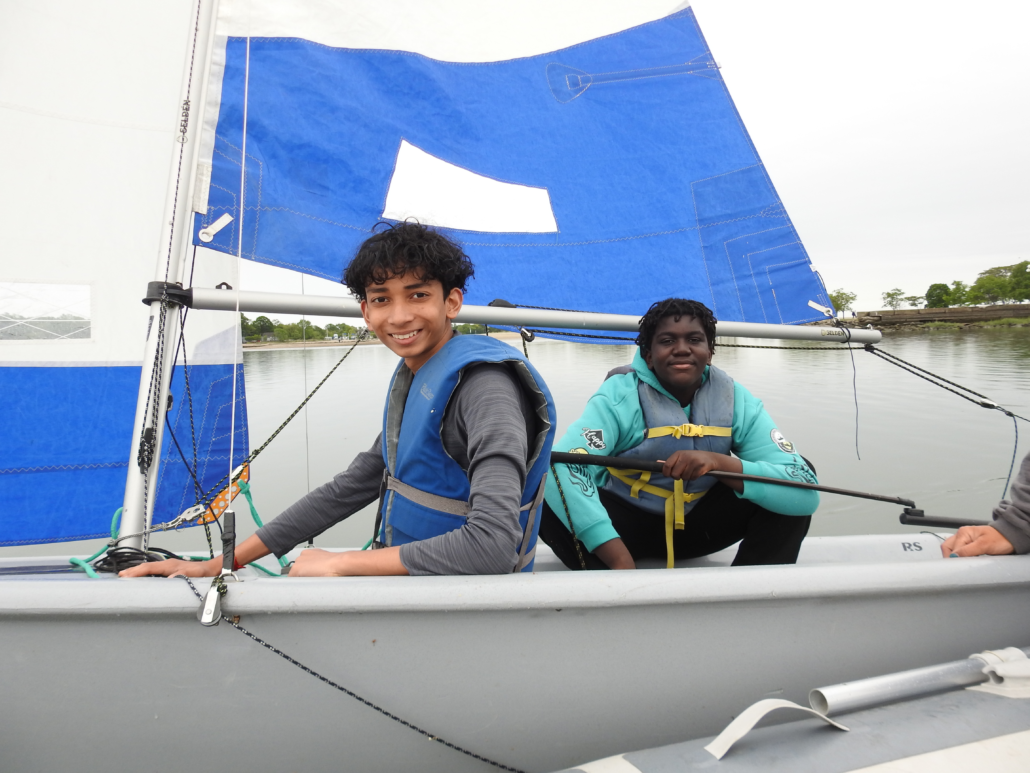
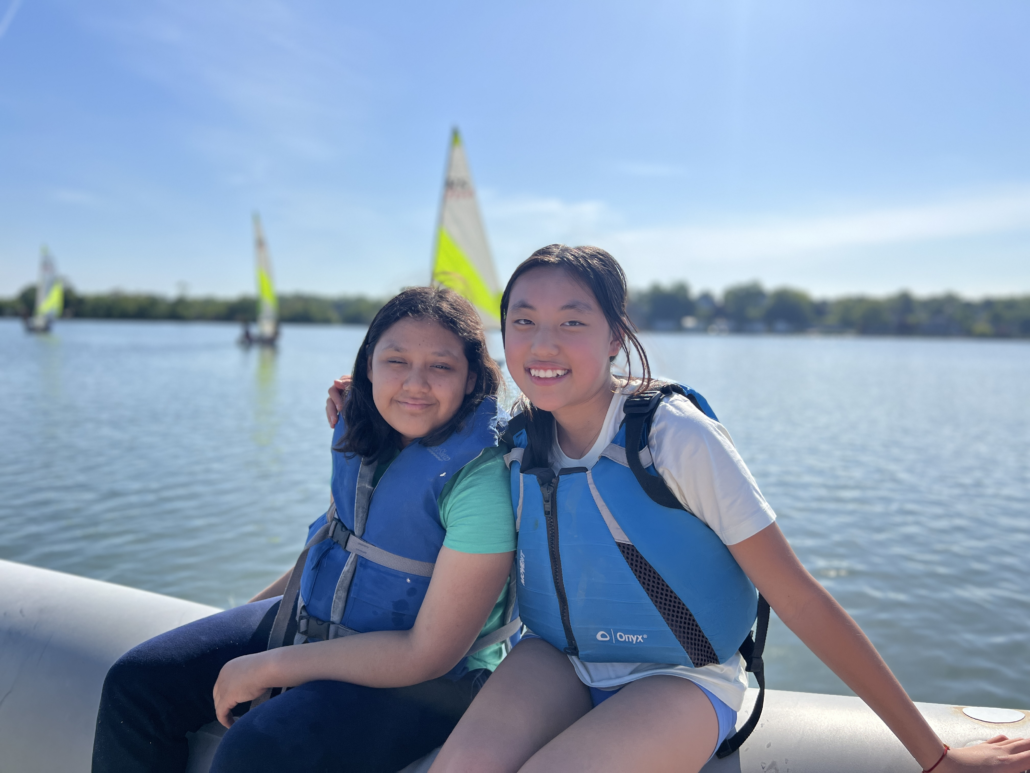
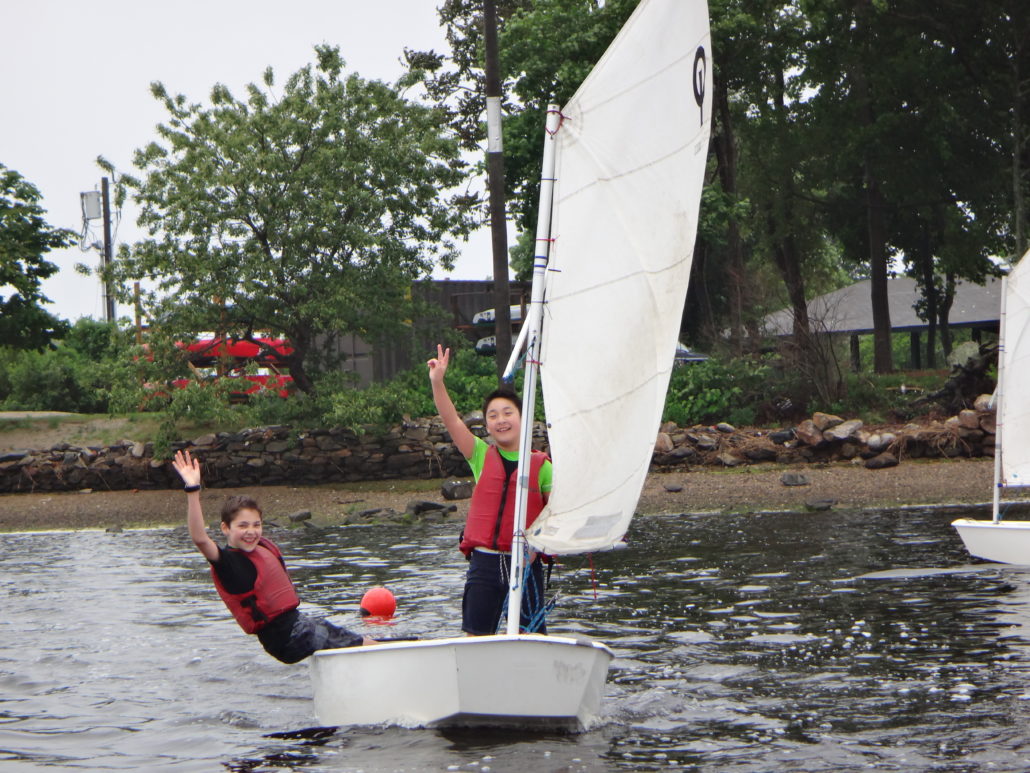
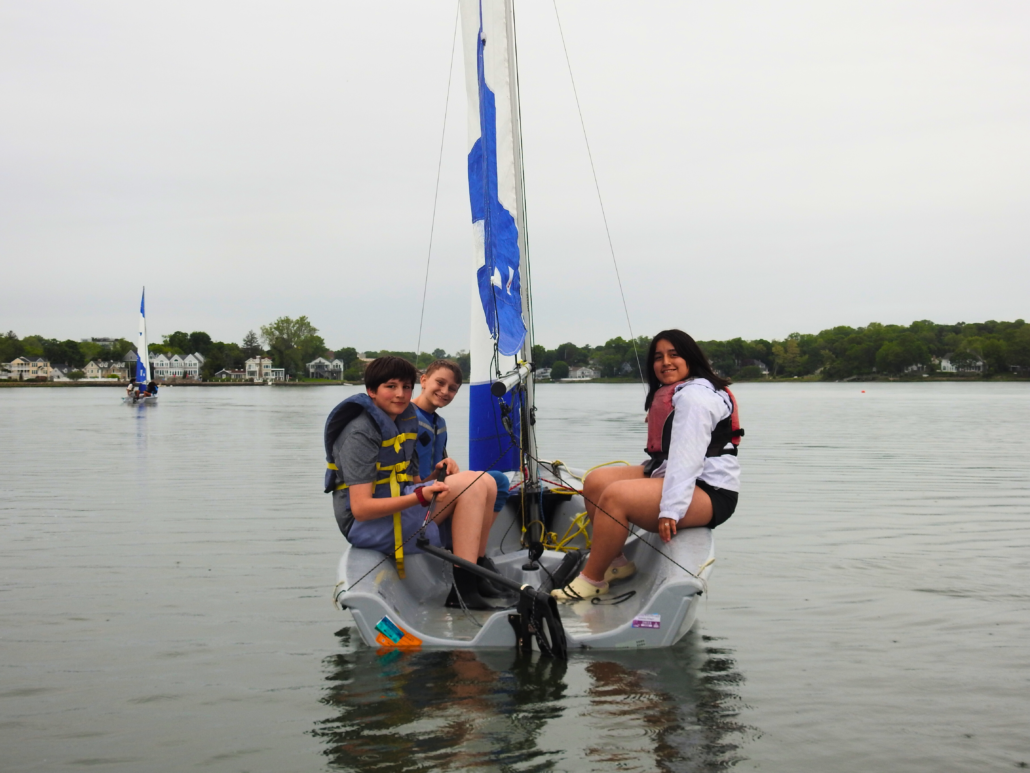
Long Island Sound offers an exceptional environment to learn how to sail, develop navigational skills and study a wide range of marine life and habitats, water quality and human impact on the environment. The SoundWaters Science and Sailing curriculum is focused on teaching students the science, technology, engineering, and mathematics that are inherent to sailing and offers a deeper look into many of the environmental science concepts learned during weekly experiments. We offer a high quality sailing instruction for all levels of experience. From beginner to seasoned racer SoundWaters will help students advance their skills to the next level.
The program meets once a week for 3 hours a day after school for 10 sessions.
ACTIVITES
Boat Anatomy
Students will learn the different parts of a boat as they rig and sail them on Holly Pond. Learn how to identify and understand the parts of your sailboat by playing fun games to reinforce what you’ve learned.
Navigating a boat
Sail like a scientist! Sailors have been using their engineering skills for hundreds of years to help them navigate their world; now it’s your turn! Use real charts, compasses, simple tools, and a little old-fashioned ingenuity to discover our location and track our speed and progress through the Long Island Sound. How do these ancient skills compare to a modern GPS system? Learning how to sail can be hard. But with SoundWaters you will learn how to position your body and hold the controls of the sailboat to be successful. Develop skills to steer your boat straight, read a chart and plot your course.
Sail Handling
Learn how to make your boat stop, and go by controlling the sails. This is important for beginner sailors to know how to do so they can be comfortable no matter the weather conditions. Play games like ‘what time is it Captain?’ to reinforce.
Points of Sail
By the end of this lesson, sailors will understand how to position their sails so they can sail in any direction, no matter where the wind is coming from. Play games on land to practice each point of sail. Head out on your boat and play games like ‘follow the leader.’
Reading the Weather & Harnessing the Wind
Learn about the conditions that make your sailboat move. Make your own anemometer so you can take measurements of the wind speed.
Animal Adaptations
The Long Island Sound is teeming with life! Help launch and retrieve our special trawl net, and see what’s living down deep in the Sound. Every sail brings a unique catch! Learn about what makes the creatures we find uniquely suited to their habitats, and get an up close and personal encounter with each species. What can we discover by using our senses to investigate these animals?
LIS Observations
It’s amazing what our powers of observation can do! Learn how to turn the things we can observe from on board our schooner into a wealth of knowledge! Learn what the “road signs” all around us mean, and how sailors use them every day. What are these things telling us now? Feel the wind on your face – what’s the direction and the speed? How should we sail the schooner as a result? And how do we fit in to the world of the Long Island Sound?
NGSS ALIGNMENT
SCHEDULE
PRICING
What They’re Saying
“The experience offered aboard the SoundWaters Schooner is like no other! It is our favorite field trip of the year! The expertise of the captain and crew is exemplary and our students come away having learned so much about Long Island Sound. The experience enriches our student’s lives and inspires them to be more active participants in taking care of their seashore community. This hands-on learning adventure is exceptional and we look forward to bringing future students for many years to come.”
– 6th grade teacher, Beardsley School,
Bridgeport Public Schools