
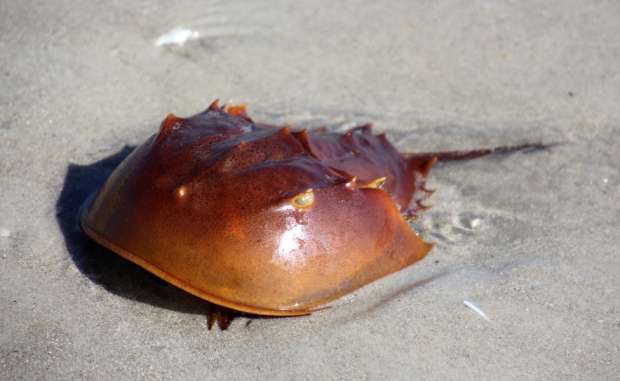
The horseshoe crabs are coming!
Hoping to see the ecological wonders of the natural world? No need to travel to the Galapagos or Costa Rica or Alaska. Extraordinary events unfold right here, at your local beach, in the local ecosystem of Long Island Sound!
Yellowstone might have massive elk migrations and Nebraska can boast the Sandhill cranes, but we have the annual horseshoe crab nesting and this pilgrimage is worth the short trip to witness at your local beach.
From late April to early July, triggered by longer daylight hours, the adult horseshoe crabs will climb out from the brackish waters onto our beaches in large numbers to dig nests and lay and fertilize eggs. Dozens of nesting pairs can be found on the beach and with a careful eye you can even find the tracks that the horseshoe crabs leave on the sand.
When can you see the most clusters of horseshoe crabs on your beach? While a few adult horseshoe crabs can be seen at any time of day, most of the crabs will cluster during high tide. The spawning increases on nights with a full or new moon when gravity is stronger and high tides are higher. This accounts for the tremendous variability in the number of animals you will find at your beach. Check your tides and your lunar cycle and come back often, even in the evening. Within just a couple hours the number of crabs on the beach can rise and fall dramatically. And keep an eye out, too, for the overall weather as the horseshoe crabs will avoid spawning during high winds and rough wave action, as they cannot navigate the heavy surf.
How many eggs will the female horseshoe crab lay? These amazing creatures can deposit up to 30,000 eggs in a nest. Not all of these eggs will develop into mature horseshoe crabs. Indeed, after the horseshoe crabs have laid their eggs, another phenomena develops. Shorebirds feast on the eggs and this provides a key source of protein for many migratory shorebirds. Given the large number of eggs, the birds do not limit the population of horseshoe crab. Instead, it is a symbiotic relationship that is part of the larger food web.
Horseshoe crabs have extraordinary longevity, but numerous studies indicate that their numbers are decreasing. This deceptively simple animal has been on the earth – mostly unchanged – for over 350 million years so any decline in the population of such a resilient creature is worrisome. The reasons for the decline are not completely known, but shore birds are likely not near the top of the list. Not surprisingly, human activity is probably playing a big role. Much of our natural coastline has been lost to development and even open beaches can be less than ideal for nesting if there is a lot of human activity. In addition, according to a recent New York Times article, the collection of horseshoe crab blood for pharmaceutical research may also be affecting population numbers.
The best thing to do while watching the horseshoe crab on their annual journey is simply to… watch. Do not touch them or disturb them. They are not speedy and a good visit requires taking your time. Sit on the beach, feel the sand between your toes and watch the graceful spawning that has been part of our world for millions of years. Who needs the Galapagos when you’ve got your local beach?


